
DIY Disinfectant Spray Recipe (Alcohol + Hydrogen Peroxide)
If you’ve been trying to simplify your cleaning routine or switch to more natural products, disinfecting is often the one area that feels confusing. A lot of natural cleaners smell great but don’t actually disinfect. This DIY natural disinfectant spray recipe keeps things simple. It uses alcohol and hydrogen peroxide for the disinfecting power, with a few essential oils added for a clean scent and mild antimicrobial support.

Looking for other natural cleaning recipes? Check out my guide to step-by-step non-toxic cleaning with my very favorite cleaning recipes I use in my own home.
This easy homemade disinfectant spray recipe that works well for everyday cleaning in kitchens, bathrooms, and other high-touch areas of the home.
If you already keep alcohol, peroxide, and essential oils in your homestead pantry, this is one of those recipes that takes less than a minute to mix up. This recipe also fits perfectly into a 10-ounce spray bottle, making it easy to keep under the sink or in a cleaning caddy.
DIY Disinfectant Spray Recipe
Ingredients
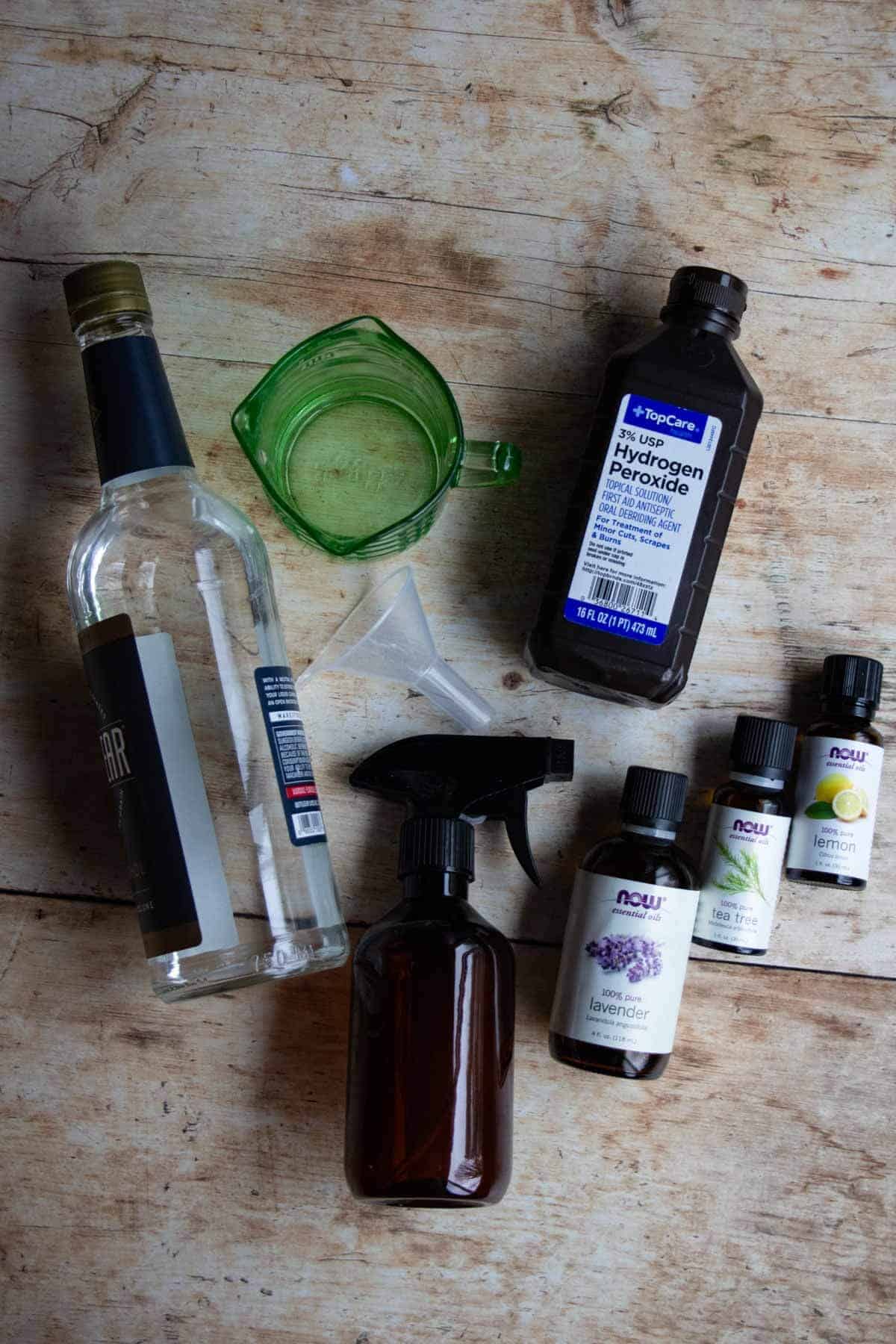
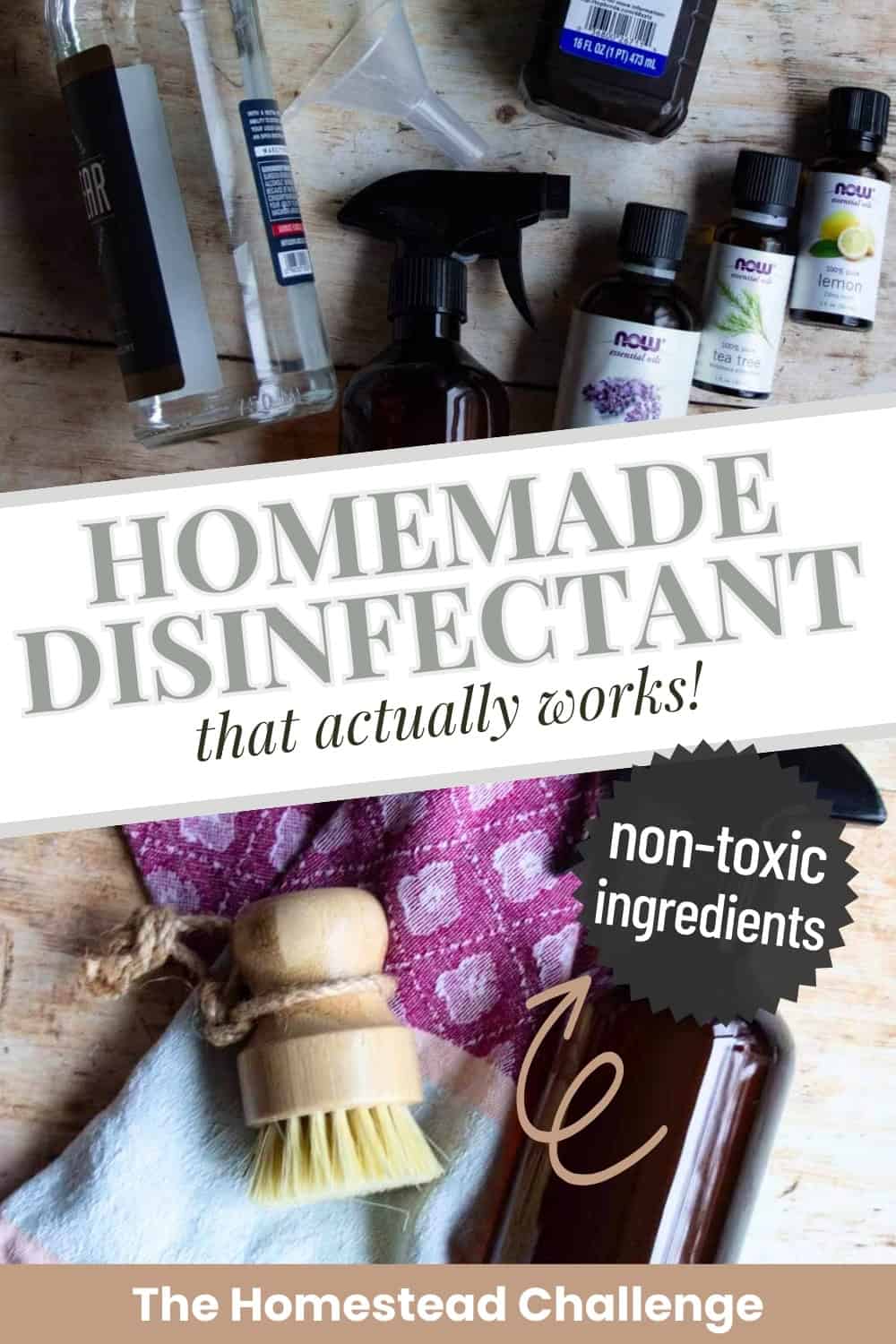
- 7.5 oz Everclear or rubbing alcohol (70–91%)
- 2.5 oz hydrogen peroxide (3%)
- 15 drops tea tree essential oil
- 10 drops lavender essential oil
- 10 drops lemon essential oil
- 10 oz Spray Bottle (must be dark in color)
Instructions
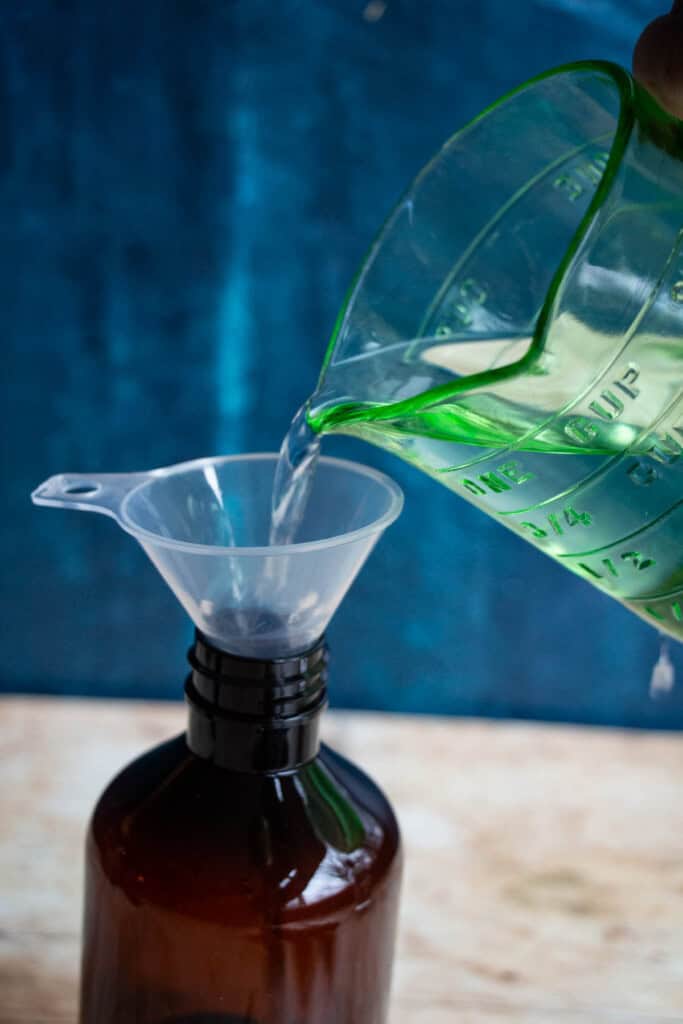
- Add the alcohol to a clean 10-ounce spray bottle.
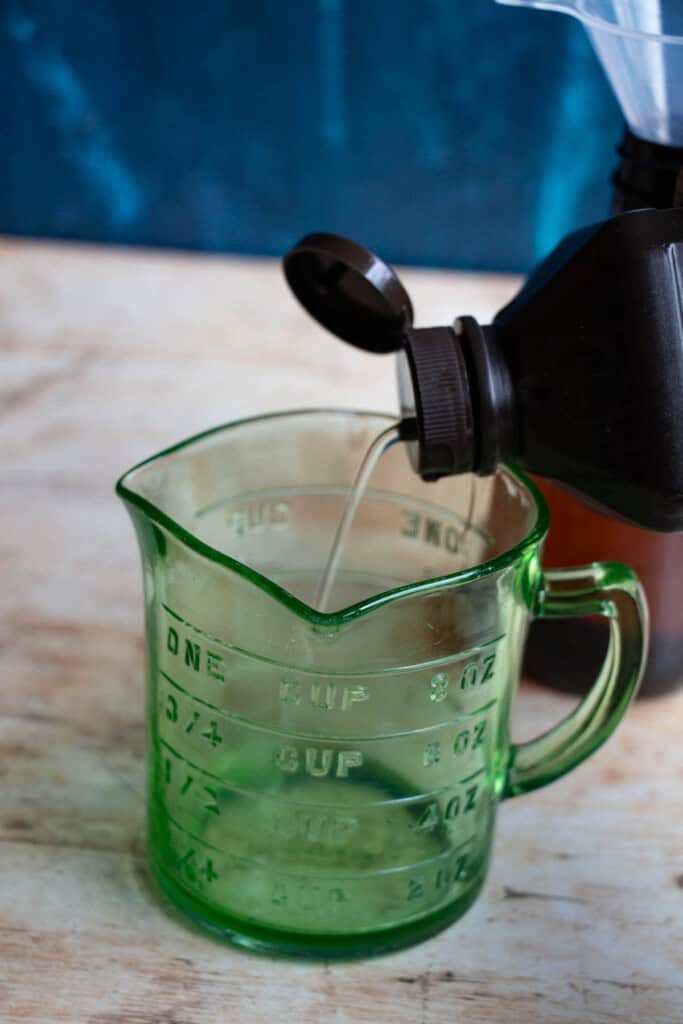
- Pour in the hydrogen peroxide.
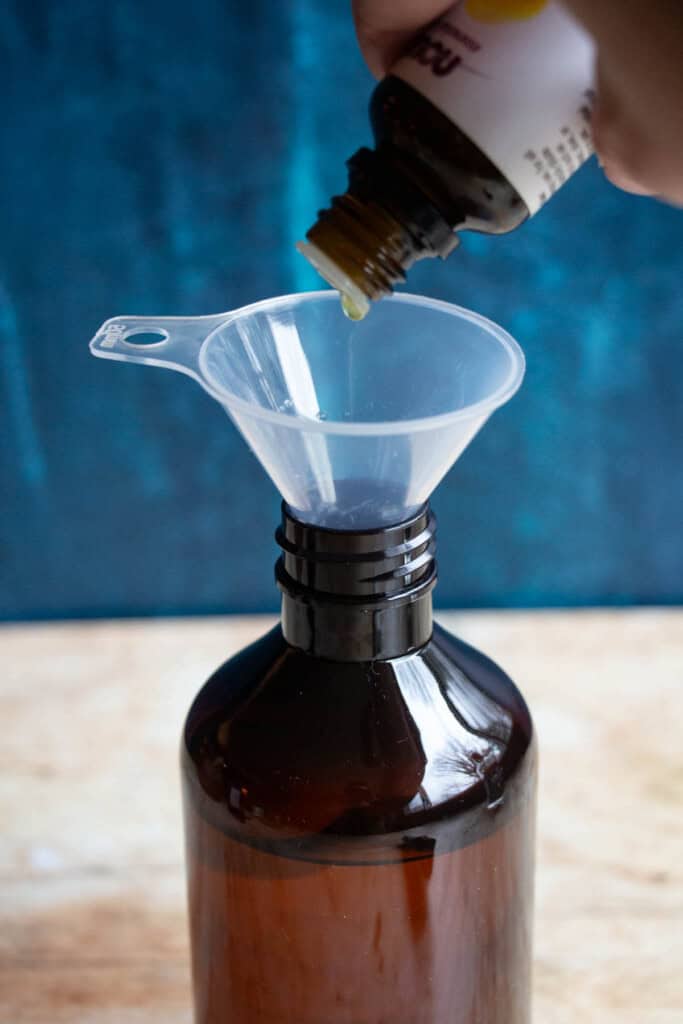
- Add the essential oils.
- Secure the spray top and gently shake to combine.
- Give the bottle a quick shake before each use.
How to Use This DIY Disinfectant Spray
This natural disinfectant spray can be used throughout the home for everyday disinfecting.
Spray the surface and allow it to sit for about 30–60 seconds before wiping so the disinfecting ingredients have time to work.
Common places to use it include:

Grab your Free Routine
The 15 Minute Homestead Routine (for busy days).
Want a simple morning rhythm that keeps your home running, your garden growing, and your goals on track? Grab my free 15-Minute Morning Routine Worksheets—designed to help you build homestead habits that stick.
- kitchen counters
- bathroom sinks
- toilet seats and handles
- light switches
- doorknobs
- appliance handles
- garbage can lids
- high-touch surfaces around the house
Storage Tips
Store your disinfectant spray in a glass or sturdy spray bottle away from direct sunlight.
Hydrogen peroxide slowly breaks down when exposed to light, so amber bottles help preserve its effectiveness.
Give the bottle a quick shake before each use to redistribute the essential oils.
When stored in a closed bottle away from sunlight, this DIY disinfectant spray typically lasts several months. Hydrogen peroxide slowly breaks down over time, so making fresh batches every few months is a good habit.
Why This Disinfectant Spray Works
This hydrogen peroxide disinfectant spray recipe uses two well-known disinfecting ingredients that many homesteaders already keep on hand.
Each ingredient plays a slightly different role in cleaning and disinfecting.
Alcohol
Alcohol is the main disinfecting ingredient in this spray.
Both Everclear (high-proof ethyl alcohol) and isopropyl rubbing alcohol work by breaking down the protective outer membranes of bacteria and many viruses. Once that membrane is damaged, the microorganism can no longer survive.
The CDC explains…
“Ethyl alcohol, at concentrations of 60%–80%, is a potent virucidal agent inactivating all of the lipophilic viruses (e.g., herpes, vaccinia, and influenza virus) and many hydrophilic viruses (e.g., adenovirus, enterovirus, rhinovirus, and rotaviruses but not hepatitis A virus (HAV) 58 or poliovirus) 49. Isopropyl alcohol is not active against the nonlipid enteroviruses but is fully active against the lipid viruses 72. Studies also have demonstrated the ability of ethyl and isopropyl alcohol to inactivate the hepatitis B virus(HBV) 224, 225 and the herpes virus, 490 and ethyl alcohol to inactivate human immunodeficiency virus (HIV) 227, rotavirus, echovirus, and astrovirus.” Source: Chemical Disinfectants Guideline for Disinfection and Sterilization in Healthcare Facilities (2008)
Alcohol also evaporates quickly, which helps surfaces dry fast and prevents excess moisture from sitting on counters, fabrics, or fixtures.
Hydrogen Peroxide
Hydrogen peroxide is another widely used disinfecting ingredient.
It works by releasing oxygen molecules that break down harmful microorganisms on surfaces. That bubbling reaction you sometimes see with peroxide is the oxygen being released.
You may occasionally hear concerns about hydrogen peroxide because it is technically an oxidizing agent, which is how it disinfects and why it can bleach hair or fabrics. Peroxide is also not safe for metals as it may ruin their finish.
Like many cleaning ingredients, it can be harmful if swallowed in large amounts, so it should always be stored safely out of reach of children and pets. However, the 3% hydrogen peroxide commonly sold in stores is widely used for household cleaning and food-safe surface sanitation.
Tea Tree Essential Oil
Tea tree oil is one of the most commonly used essential oils for cleaning because of its strong antimicrobial properties.
It has long been used in natural cleaning routines and can help support the disinfecting power of the alcohol and peroxide.
Lavender Essential Oil
Lavender oil provides gentle antibacterial support and helps balance the scent of the cleaner.
Tea tree oil can have a strong medicinal smell on its own, so lavender helps soften the scent and makes the spray more pleasant.
Lemon Essential Oil
Lemon oil adds a fresh citrus scent and mild antimicrobial properties.
Many people like lemon oil in cleaning recipes because it makes the spray smell clean without relying on synthetic fragrance.

FAQs + Troubleshooting
Pin this Natural Disinfectant Spray for Later!

About the Author
Brittany Gibson is a modern suburban homesteader and the founder of The Homestead Challenge. She empowers women to adopt a simpler, more self-sufficient lifestyle, feeling confident to grow, create, and thrive on their own terms with joy and balance.
Read more about my transformation and join me in building our lives from scratch.
DIY Disinfectant Spray Recipe

Equipment
- 1 Spray bottle
- 1 Funnel
Ingredients
- 7.5 oz Everclear or rubbing alcohol
- 2.5 oz hydrogen peroxide
- 15 drops tea tree oil
- 10 drops lemon essential oil
- 10 drops lavender essential oil
Instructions
- Add the alcohol to a clean 10-ounce spray bottle.
- Pour in the hydrogen peroxide.
- Add the essential oils.
- Secure the spray top and gently shake to combine.
- Give the bottle a quick shake before each use.
