
Herbs for Stress and Anxiety
We need to talk about stress. I don’t know what is going on lately… but it feels like everyone’s nervous system is overloaded. Adaptogens and Nervines are categories of herbs that can help regulate your nervous system, but how do you know which to take? As a beginner herbalist, I started taking the wrong types of stress support for my needs, and ended up a bit jittery and wired. I want to break down adaptogens and nervines so you take the right herbs for your stress, anxiety, and burnout.
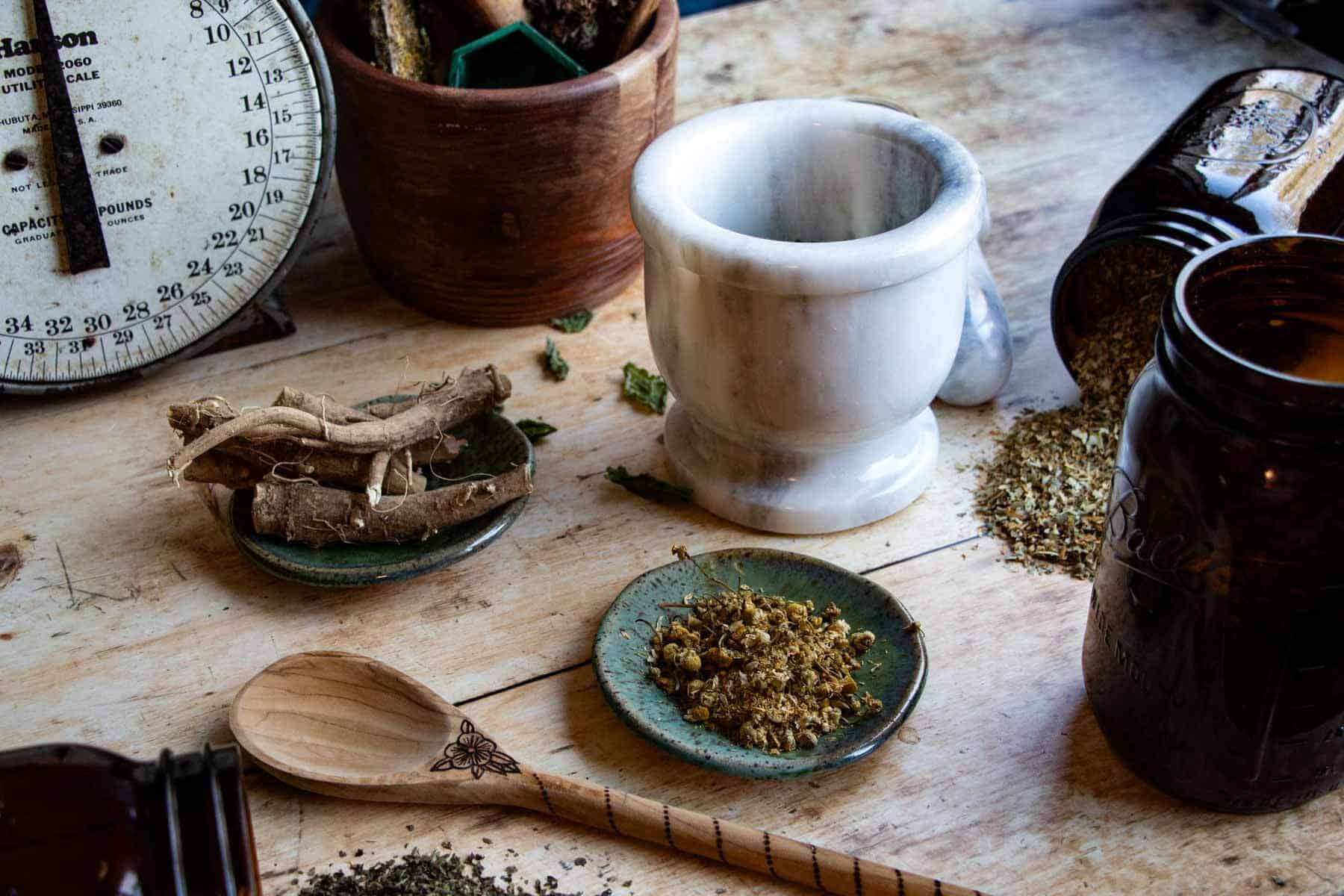
If you’ve ever walked into herbalism thinking, “I just need something to calm down,” you are not alone. That’s exactly how I started. But here’s what I didn’t understand in the beginning: Not all stress-support herbs work the same way.
Ready to make a tea to calm your nerves? Check out my favorite stress relief tea blend.
Herbs for Stress and Anxiety
Let’s break down:
And how to know which one might actually fit your season of life.
Medical disclaimer: I am not a medical professional and I am not claiming that these herbs are a substitute for professional care. Always consult a professional for medical advice when starting natural remedies at home. These are just things that I use and love in my own home.
What Are Adaptogens?
Adaptogens are herbs that help your body adapt to stress over time.
They primarily support your stress response system (often called the HPA axis — your hypothalamus, pituitary, and adrenal glands).
They are not instant.
You don’t take an adaptogen during a panic attack expecting immediate relief.
Instead, adaptogens help you build resilience over weeks (or longer).
Think: Long-term stress support.
When I first started herbalism, I began with ashwagandha because I was trying to calm my nervous system in a sustainable way. And it truly helped me feel more steady over time.
But here’s something I didn’t know:
There Are Calming AND Stimulating Adaptogens
This is where so many people get confused.
Calming (Grounding) Adaptogens
These are best if you feel:
- Anxious and exhausted
- Wired but tired
- Overstimulated
- Burned out from overwhelm
- Struggling with stress-related sleep issues
Examples include:
- Ashwagandha
- Reishi
- Holy Basil (Tulsi)
- Schisandra
- American Ginseng
These tend to feel more grounding and stabilizing.
If you are already highly anxious, this is often where you want to start.

Grab your Free Routine
The 15 Minute Homestead Routine (for busy days).
Want a simple morning rhythm that keeps your home running, your garden growing, and your goals on track? Grab my free 15-Minute Morning Routine Worksheets—designed to help you build homestead habits that stick.
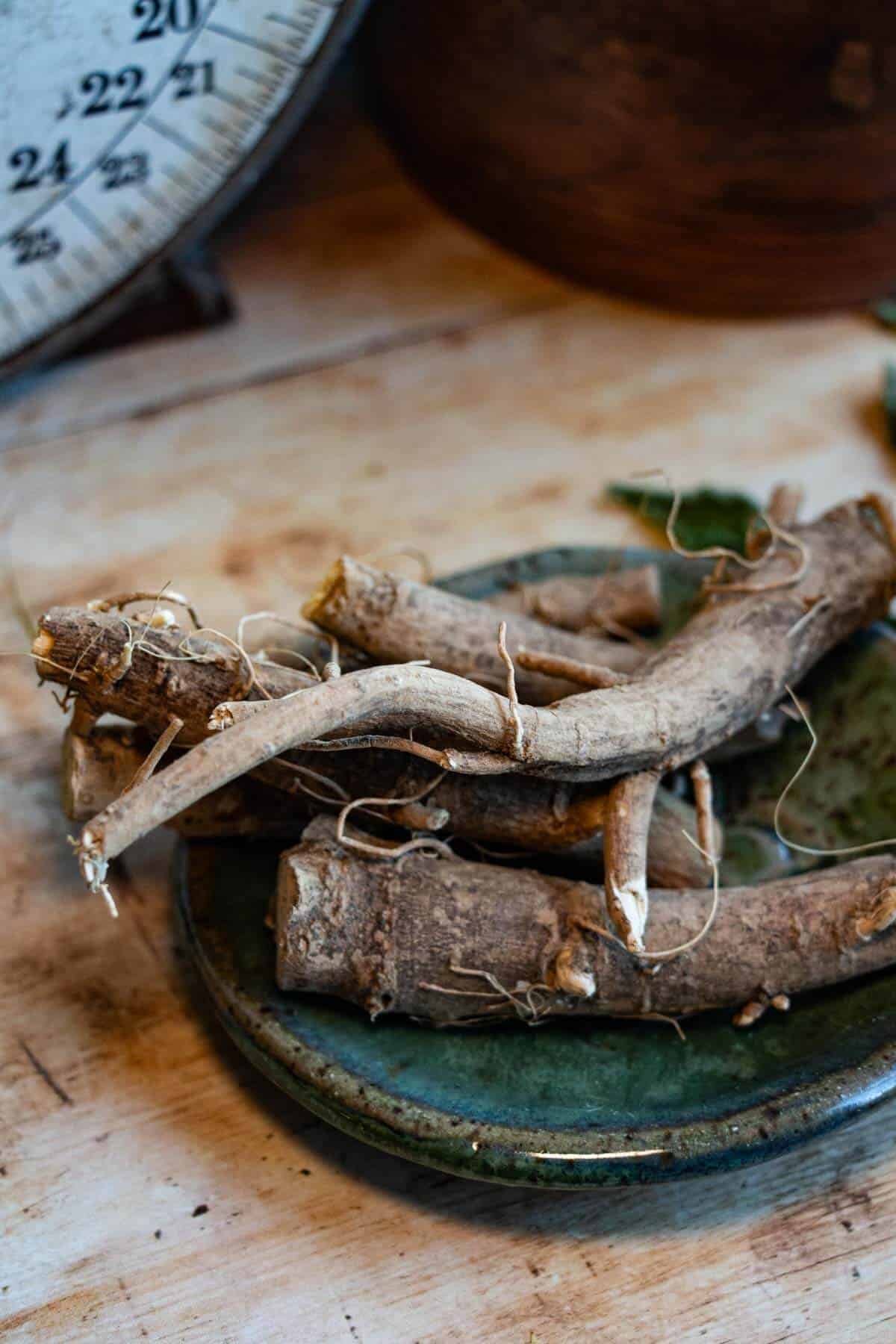
Stimulating (Energizing) Adaptogens
These are better if you feel:
- Sluggish
- Foggy
- Fatigued
- Low stamina
- Burned out but more “flat” than anxious
Examples include:
- Rhodiola
- Eleuthero
- Panax Ginseng
- Cordyceps
- Maca
If you are already overstimulated, these may feel like too much.
That was my mistake early on — I tried rhodiola during a season when I was already anxious, and it didn’t feel supportive at all. It wasn’t that the herb was “bad.” It just wasn’t the right category for my body at that time.
How to Take Adaptogens
- Daily
- For at least 4–12 weeks
- Often as tinctures, capsules, powders, or decoctions
- One herb at a time when starting
Adaptogens are about consistency — not quick fixes.
What Are Nervines?
Nervines work more directly on the nervous system.
Unlike adaptogens, many nervines can offer more immediate calming effects.
Nervines can relax, calm, or nourish immediately while also gently supporting over time.
Nervine Relaxants
These are helpful if you:
- Can’t turn off your brain at night
- Feel tense
- Have racing thoughts
- Experience muscle tension
- Need immediate calming support
Examples:
- Chamomile
- Lemon Balm
- Skullcap
- Passionflower
- Catnip (wonderful for kids)
These are often taken as teas or tinctures.
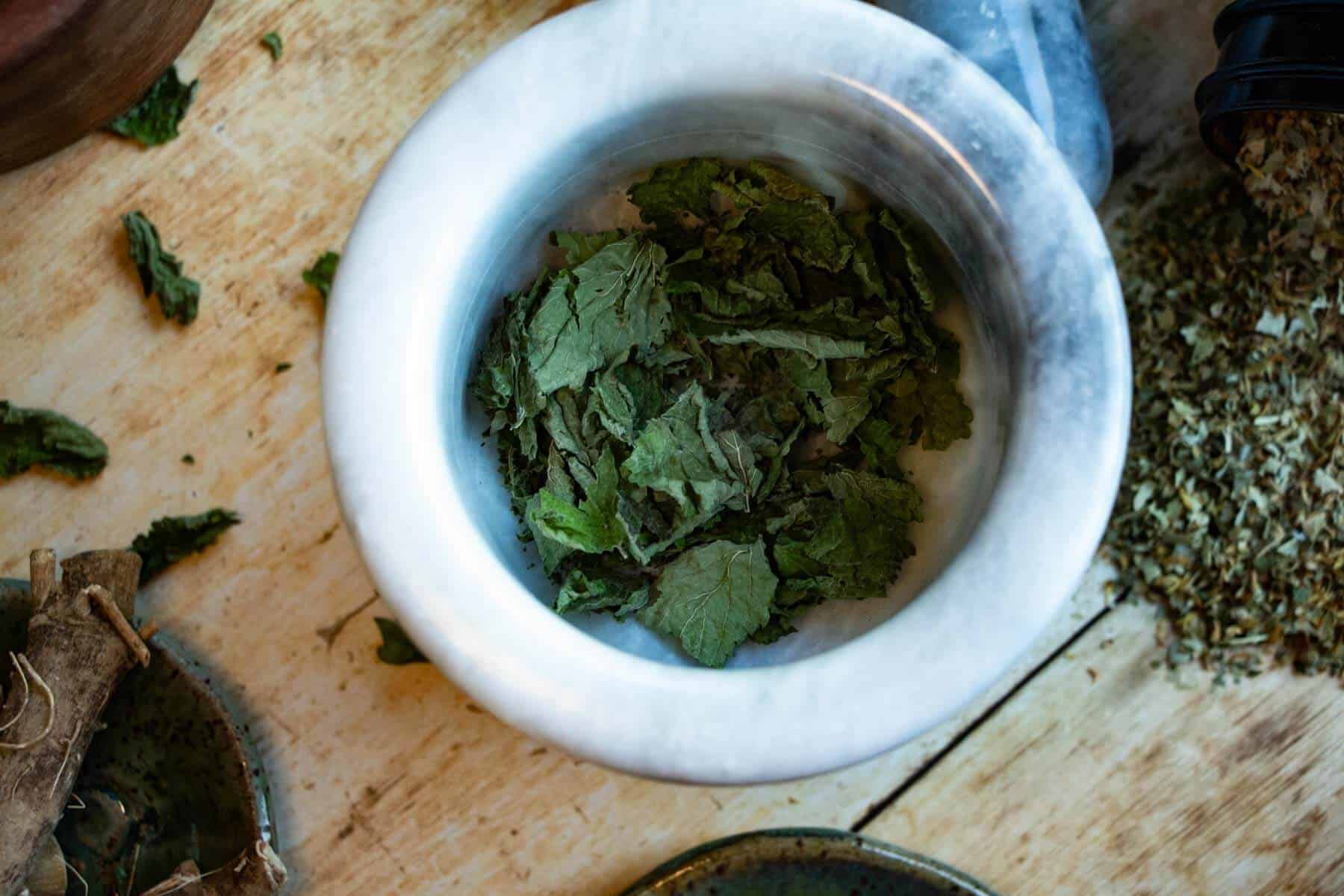
Nervine Tonics (Nourishing Nervines)
These are deeply nourishing and can be taken daily long-term.
They are helpful if you feel:
- Frazzled
- Drained
- Nervously exhausted
- In recovery from burnout
Examples:
- Oatstraw/Milky Oats
- Nettle
- Linden
These herbs build the nervous system back up over time while also offering immediate support.

What About Antidepressant or Mood-Supporting Herbs?
Sometimes what we’re experiencing isn’t just stress. Sometimes it’s low mood. Especially in winter. Mood-supporting herbs primarily help support emotional state and seasonal blues.
Examples include:
St. John’s Wort
- Traditionally used for mild to moderate depression
- Often used for seasonal affective disorder
- Must be used cautiously due to medication interactions (especially SSRIs)
Mimosa (Albizia)
- Often called the “Tree of Happiness”
- Traditionally used for grief and emotional heaviness
- Gentle mood support
Lemon Balm
- Technically a nervine
- Very helpful for anxious depression
- Beginner-friendly
- Often used as tea
These herbs can overlap categories, but their primary action is emotional support.
How Do You Know What You Need?
Here’s a simple way to think about it… If you say to yourself:
“I’m constantly stressed and depleted.”
→ Consider adaptogens.
“I can’t shut my brain off tonight.”
→ Consider a nervine relaxant.
“I’m frazzled and worn down long-term.”
→ Consider a nervine tonic.
“I feel heavy and low, especially in winter.”
→ Consider mood-supporting herbs.
If you feel severely depressed:
→ Seek professional support.
Herbs can be supportive tools, but they are not a replacement for medical care.
How to Start Taking These Herbs
Always remember:
- Introduce one herb at a time.
- Start with a low dose.
- Observe how your body responds.
Important Safety Notes
- Always check herb–drug interactions (especially St. John’s Wort).
- Use caution with adaptogens if you have autoimmune conditions.
- Pregnancy and breastfeeding require additional research.
- Work with a healthcare provider when adjusting medications.
Modern medicine and herbal support can coexist.
You Don’t Need a Complicated Protocol
Sometimes what you need is 12 weeks of steady adaptogen support. Sometimes what you need is sunshine and movement. And sometimes what you need is a warm cup of chamomile before bed.
Herbalism doesn’t have to be overwhelming. Understanding the categories is often the missing piece. Because when something doesn’t work, it’s not always that herbs failed… It might just be that we were using the wrong category for the season we were in.

Sources:
Herbal Academy. “9 Ways to Support Mental Health with Herbs on Blue Monday and Beyond.” The Herbal Academy, January 19, 2026. https://theherbalacademy.com/blog/herbs-on-blue-monday/.
Horne, Thomas, and Katja Swift. The Modern Herbal Dispensatory: A Medicine-Making Guide. Berkeley, CA: North Atlantic Books, 2016.
NCCIH (National Center for Complementary and Integrative Health)
Ashwagandha, Rhodiola, and Ginseng fact sheets.
https://www.nccih.nih.gov
Richardson, Kaylee. The Beekeeper’s Apothecary: A Foundational Guide for Becoming Your Own Herbalist. Warren County, VA: Homestead Living, 2025.
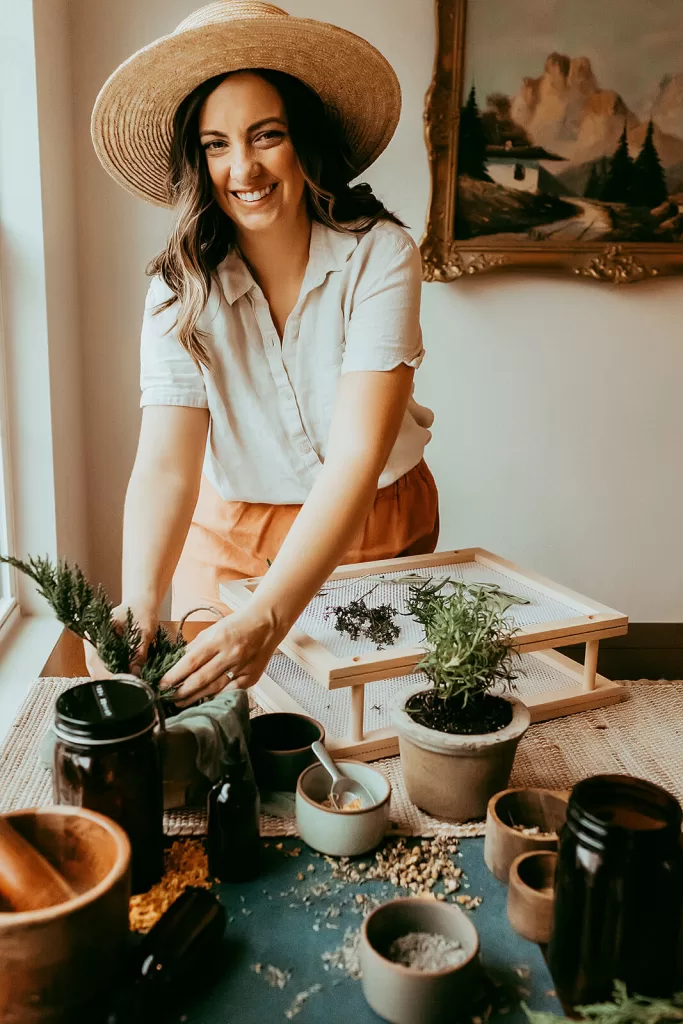
About the Author
Brittany Gibson is a modern suburban homesteader and the founder of The Homestead Challenge. She empowers women to adopt a simpler, more self-sufficient lifestyle, feeling confident to grow, create, and thrive on their own terms with joy and balance.
Read more about my transformation and join me in building our lives from scratch.
